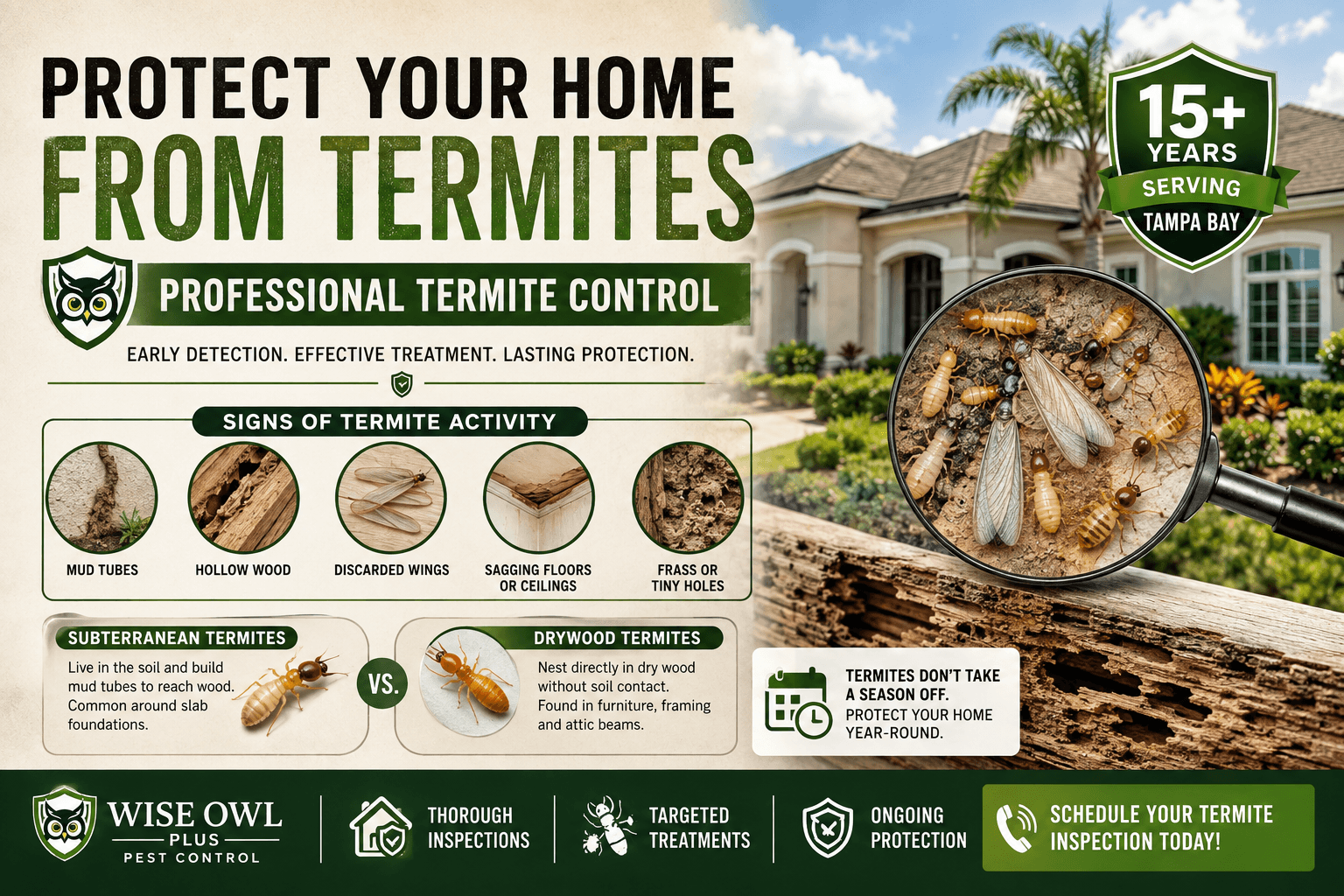
- Mud tubes running along the foundation, crawl space, or exterior walls.
- Hollow-sounding wood when tapped, especially around door frames and baseboards.
- Discarded wings near windows, doors, or light fixtures.
- Sagging floors or ceilings in advanced infestations.
- Tiny holes or frass (termite droppings resembling sawdust) near wood structures.
Tampa Bay homeowners typically see termite swarms after warm rain events, when mature colonies send out winged reproductives to start new colonies nearby. A swarm inside or near your home is one of the clearest signs you need termite control — and the sooner it's addressed, the less damage the colony can do.
What Triggers Termite Swarms in Florida
Termite colonies swarm when temperature, humidity, and daylight conditions align — conditions that occur repeatedly through Florida's warm season. Subterranean termites, the most common species in the Tampa Bay area, often swarm after a warm rain, while drywood termites tend to swarm in the evening. Discarded wings on windowsills or porches are frequently the first sign homeowners notice.
Signs of Termite Activity
Subterranean vs. Drywood Termites in Tampa Bay
Subterranean termites live in the soil and build mud tubes to reach wood, making them common around slab foundations throughout Tampa, Brandon, and Riverview. Drywood termites nest directly inside dry wood — furniture, framing, even attic beams — without needing soil contact at all. The treatment approach differs for each, which is why an accurate inspection matters more than a generic spray. The UF/IFAS Pest Alert program tracks termite swarm activity across Florida each season and is a useful resource for homeowners wanting to understand regional risk.
How Professional Termite Control Protects Your Home
Effective termite control starts with a thorough general pest inspection to confirm species and locate activity, followed by a targeted treatment plan — liquid soil treatments, baiting systems, or direct wood treatment depending on the infestation type. Wise Owl Plus's termite control program is built specifically for Tampa Bay's subterranean and drywood termite pressure, using state-certified technicians and EPA-certified products.
Frequently Asked Questions
How do I tell termite wings from flying ant wings?
Termite wings are equal in length and shape, while flying ants have longer front wings and shorter back wings. Termites also have straight antennae, versus an ant's bent, elbowed antennae.
How much damage can termites cause before I notice?
Termites can feed on structural wood for months or years before visible damage appears, since most activity happens inside walls, floors, and foundations.
Is termite control a one-time treatment?
No. Most effective termite programs include ongoing monitoring and periodic retreatment, since new colonies can move in even after an existing one is eliminated.
Does homeowners insurance cover termite damage?
Typically not — most policies classify termite damage as preventable and exclude it, which is why proactive termite control is the most cost-effective protection.
Saw discarded wings or mud tubes around your Tampa home? Schedule a termite inspection with Wise Owl Plus before swarm season does more damage.
Need Professional Pest Control?
Wise Owl Plus LLC is Tampa Bay’s trusted pest control company. Call for a free inspection — available 7 days a week.